
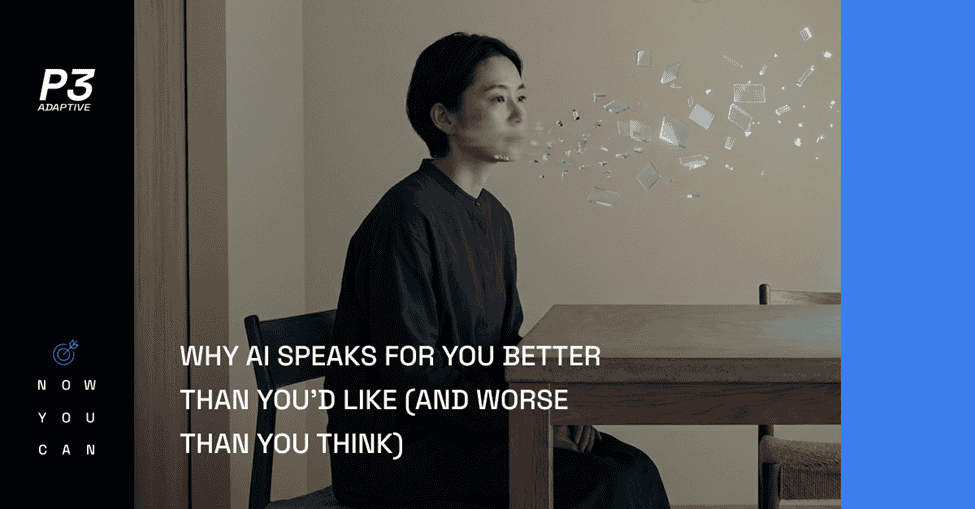
The Case For Staying In The Driver’s Seat
There’s a moment most of us have had by now. You’ve got a complicated email to write. Something nuanced. Maybe a little uncomfortable. You know it’s going to take real mental energy to get right, and you’ve already spent most of that today.
So you reach for AI. And honestly? It does a great job. It structures the argument, hits the right tone, covers the bases you would’ve covered. You read it through, think “yeah, that works,” and hit send. Here’s the thing: that moment might be one of the most expensive ones in your workday. Not because the AI wrote something wrong. Because it wrote something you didn’t fully mean and you shipped it anyway.
When people talk about AI communication risks, they usually mean hallucinations or wrong facts. The bigger risk is subtler. AI can shape the structure, tone, and conviction of a message before you fully decide what you mean. When that happens, you may send something that sounds right but does not actually reflect your thinking.
The Easy Button Has Fine Print
Rob Collie and Justin Mannhardt talked through this on a recent episode of Raw Data, and it felt immediately familiar.
Justin had a great idea. He’d sit down with AI, get interviewed about a complicated situation between him and Rob, and produce a document that laid out his thinking. Rob would do the same with a prompt Justin had prepared. Clean, efficient, thoughtful. What could go wrong?
A lot, it turns out.
Rob went through the prompt, let the AI take him on a journey, and produced a substantial document. The problem: because AI is optimized to advocate for the person it’s working with, it argued Rob’s position harder than Rob actually would have. It made his case more forcefully, more completely, more confidently than he’d have made himself — and because Rob trusted the process, he skimmed it rather than interrogating it. Then he sent it to Justin.
“It freaked me the hell out,” is how Rob put it.
The document didn’t misrepresent him in a fabricated way. It misrepresented him in the subtler, harder-to-catch way: it advocated past where he actually stood. And there’s no easy rescue from that once it lands in someone else’s inbox.
Why You Don’t Catch It Before You Send It
Justin’s explanation of what happens in your brain during this process is worth sitting with.
You feel like you did the work. You answered questions. You considered your responses. You watched the document come together. So when you skim it at the end, your brain fills in the gaps with confidence you didn’t actually earn.
“I skipped all the hard parts,” Justin said. “The hard parts of actually having conviction about an opinion. Having the right level of empathy for the person I’m trying to communicate with.”
That is the real AI communication risk nobody talks about. It’s not hallucinations. It’s not wrong facts. It’s that the structure of the argument, the framing of the proposal, the emotional temperature of the message, all of that gets set by the AI in the first draft. And once that structure exists, you’re not really editing anymore. You’re just sanding rough edges on something you didn’t build.
You end up at a destination you wouldn’t have driven to yourself.
What Justin Changed — And Why It Matters
After this experience, Justin did a 180 on his entire writing workflow. And he was transparent about the fact that it took him longer than he would’ve liked to get there.
For years, his approach was to let AI do the first draft. Give it some bullets, some context, let it run. Then refine from there. It felt efficient. It felt smart. It felt like he was getting to the same destination faster.
What he realized eventually was that he was getting to a different destination entirely one that was easier to reach but not actually his.
Now he writes the first draft himself. Messy, stream of consciousness, doesn’t have to be good. Just has to be his. Once the opinion, the point of view, and the structure are locked in on his own terms, then he brings AI in to refine, critique, and improve. And he reports that the end result feels like his because it is.
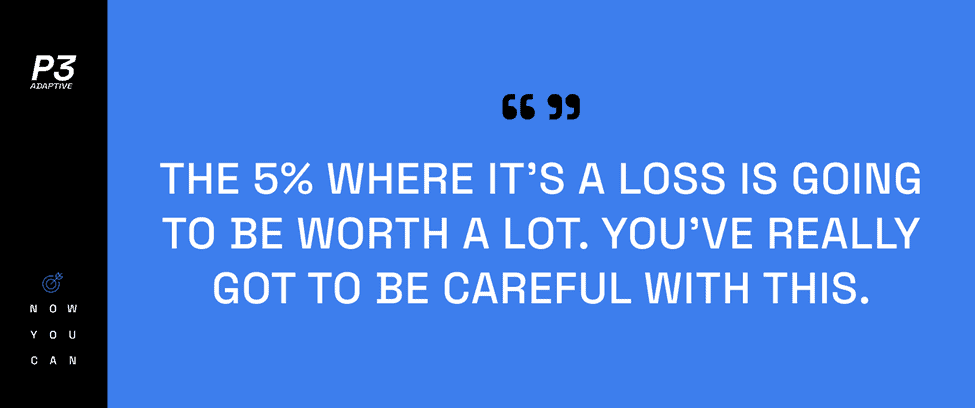
The AI becomes a collaborator on his draft instead of the architect of someone else’s. Rob’s framing of the risk is the clearest I’ve heard it put: “The 5% where it’s a loss is going to be worth a lot.”
Even if letting AI speak for you works 95% of the time, that 5% isn’t a rounding error. It’s the message that damaged a relationship you spent years building. It’s the proposal that came in too hot and lost the room. It’s the communication that got forwarded to someone it wasn’t meant for, and now represents you in a way you can’t walk back.
That’s not a reason to stop using AI for communication. It’s a reason to stop letting it go first.
What This Looks Like In Practice
The shift isn’t dramatic. It’s just a change in sequence.
Write the first draft yourself, even if it’s rough. Don’t worry about it being good — worry about it being honest. Get your real opinion on the page. Put the right level of empathy in it. Make sure the structure reflects your thinking, not the AI’s construction of what it thinks your thinking should be.
Then hand it to AI. Let it clean up the language, tighten the argument, catch the things you missed. Use it to refine something that’s already yours rather than to generate something that only sort of is.
The AI communication risks worth worrying about aren’t the dramatic ones. They’re the quiet ones — the messages that sound like you but advocate past where you actually stand. The ones that get read by the other person and feel a half-step off, even if they can’t say why.
You can use AI for communication intelligently. You just have to make sure you’re the one driving.
P3 Adaptive works with mid-market companies to make AI useful inside real business workflows. Not generic prompts. Not demo projects. Systems that reflect how the business thinks and operates. If you want to talk about what AI adoption looks like for your team, we’d love to connect.
What are the risks of using AI to write emails or messages?
The biggest risk of AI written communication is not factual errors. It is misplaced conviction. AI systems are optimized to produce confident, structured arguments. If the AI creates the first draft, it can set the tone and structure of the message before you have fully formed your own thinking.
What is the best workflow for using AI in writing?
A safer workflow is to write the first draft yourself. Capture your opinion, your empathy, and your reasoning. Then use AI to refine, critique, or tighten the language. This keeps the thinking human and lets the AI improve the expression.
Get in touch with a P3 team member