
Why Teams Have to Rethink How Work Gets Done First
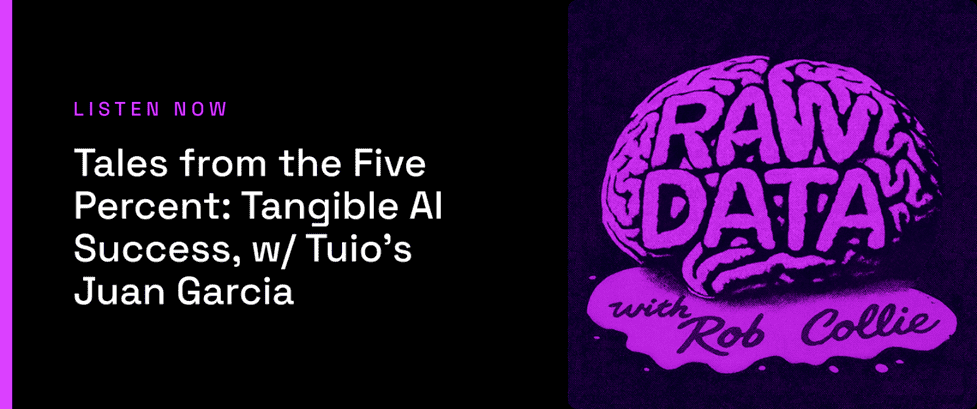
In last week’s Raw Data with Rob Collie episode (featuring special guest Juan Garcia) one thing became clear fast. The hard part of using AI wasn’t the models. It was the work invested in process re-engineering.
Before Tuio ever saw gains in claims throughput, Juan’s team spent months redesigning how decisions flowed, where confidence mattered, and what humans actually needed to stay responsible for. The AI came later. On purpose.
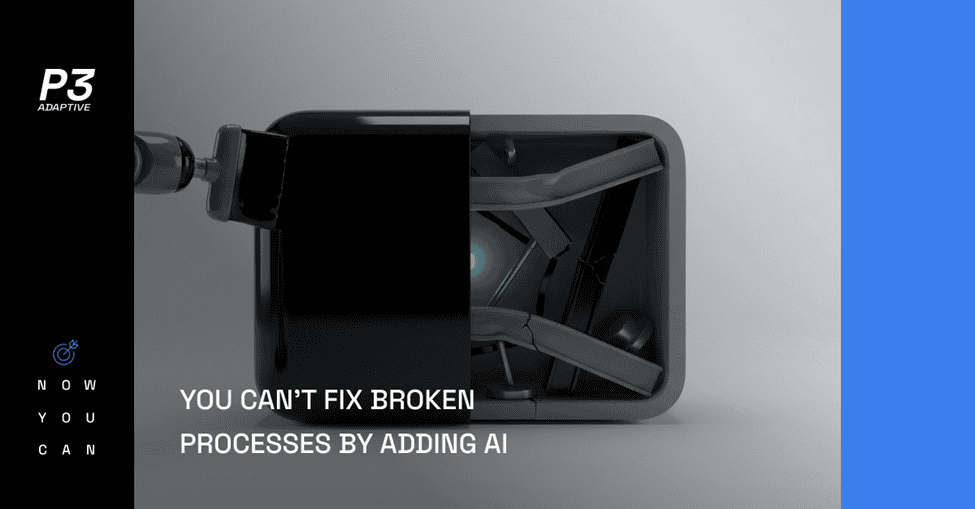
That’s where a lot of AI efforts get stuck. Not because the technology doesn’t function. But because it gets layered onto workflows that were already struggling. Automation doesn’t fix that. It exposes it.
Examples are easy to imagine: A team is buried in manual reconciliation. Approvals pile up. Ownership is fuzzy. Everyone’s busy, but nothing feels under control. So leadership decides it’s time to automate.
They roll out a tool. Maybe it’s AI. Maybe it’s workflow software. The label doesn’t really matter.
What happens next usually surprises no one who’s lived through it.
The automation hits the same bottlenecks the people did. Only now the problems surface faster. Alerts fire. Pipelines stall. Reports multiply. The CFO who used to review spreadsheets by hand is now reviewing automated outputs that still don’t line up with reality.
The tool didn’t break the process. The process was already broken. The tool just made it visible.
Automation Doesn’t Change Reality.
It reveals it. In reality, if your process works, automation accelerates it. If your process is broken, automation magnifies every crack.
In that hypothetical process above? The ops team runs a weekly report. Takes four people three hours each. They pull data from six places, reconcile it manually, email it around, wait for feedback, and revise it twice before anyone acts on it.
You automate that data pull. Great.
But now what? Who decides what the data means? Who owns the action? What happens when the numbers don’t match expectations? Who’s accountable?
If those questions weren’t answered before the automation, they won’t be answered after. You’ve just built a faster way to create the same confusion. For success, the process needs to be re-engineered.
What Re-Engineering Actually Means
Process re-engineering isn’t an empty buzzword. It means stepping back and asking: How should this actually work?
Not “how does it work now.” Not “how can we make the current version faster.” But: if we designed this from scratch, knowing what we know now, what would we build?
That question forces clarity. And clarity is what broken processes lack.
Real re-engineering looks like this:
Roles get redefined. The person who used to manually reconcile invoices doesn’t disappear. But their role shifts. They’re no longer doing repetitive data entry. They’re managing exceptions. They’re reviewing patterns. They’re making judgment calls the system can’t make.
Decisions get explicit. Who approves what? When? Based on what criteria? If the answer is “it depends” or “we just know,” the system won’t know. You have to codify the logic before you can automate it.
Accountability gets assigned. When something goes wrong, who fixes it? When the system flags an issue, who investigates? If nobody owns the outcome, the automation creates alerts nobody acts on.
This is the hard part. It’s not about the tech. It’s about redesigning the work itself so the tech has something solid to build on.
People Don’t Disappear, They Evolve
The biggest fear around automation? “What happens to my team?”
People don’t disappear. Their role in the system changes.
Instead of doing repetitive work, they become part of a larger operating structure. They handle the exceptions. They improve the process. They make the calls that require context the system doesn’t have.
Before, your team was the system. They were the infrastructure. Every task ran through them because there was no other way.
After process re-engineering, your team manages the system. They’re no longer the bottleneck. They’re the intelligence layer. The system handles scale and consistency. Your team handles judgment and iteration.
That’s a better job. It’s also necessary. Because the old model, humans doing repetitive work at scale, doesn’t scale. It breaks. And when it breaks, the business suffers.
If Modernization Doesn’t Hurt a Little, You’re Just Digitizing the Mess
Your modernization project should absolutely make you a little uncomfortable.
Real change forces hard questions. Who’s responsible for this? Why do we do it this way? What would we do differently if we started over?
If you’re not asking those questions, you’re not re-engineering. You’re just digitizing what you already have.
And that’s expensive. Not just in dollars. In time. In trust. In the opportunity cost of not fixing what’s broken.
The durable results don’t come from the tool. They come from the redesign. From the clarity. From the decision to stop working around the problem and start solving it.
The Hard Work Happens Upstream
Most teams want to skip to the solution. (Who wouldn’t want to do that?) They want the dashboard. The AI assistant. The automated workflow.
But the solution only works if the foundation is solid.
That means adding in a step for process re-engineering.
Mapping the process as it is. Not as it’s supposed to be. Not as it was designed five years ago. As it runs today. With all the workarounds. All the manual fixes. All the places where someone “just knows” what to do.
Identifying the breaks. Where does it slow down? Where do errors happen? Where does accountability get fuzzy? Those are the places AI will hit a wall.
Redesigning for clarity. What should the workflow look like if you built it today? Who owns each step? What’s the decision logic? What’s the output? What happens when it breaks?
This work is unglamorous. It’s also the only way to make automation deliver.
Because automation doesn’t replace thinking. It replaces execution. And if the thinking was unclear to begin with, the execution will be too.
For most teams, this is where speed matters. You don’t have six months to spend on process mapping. You need someone who can spot the breaks fast, redesign around them, and build something that works within weeks, not quarters.
Start Small, Build Smart
You don’t have to redesign everything at once.
Start with one process. One workflow. One pain point that costs time or creates friction.
Map it. Break it down. Redesign it. Then build the system that supports the new design.
That’s how progress happens. Not in one big transformation. In small, deliberate moves that stack.
We’ve seen this before. A finance team spending 12 hours a week on manual reporting. An ops team drowning in exception handling. A sales team entering the same data in three different places.
Pick one. Fix the process. Build on what you already have: your existing Power BI setup, your Fabric environment, your data sources.
Then move to the next one.
Two Weeks to Happiness
We’re not interested in six-month engagements that leave you with documentation and no results.
Our promise is simple. If you’re not seeing real progress within two weeks, we haven’t earned the right to continue. And we don’t lock teams into contracts that don’t make sense anymore.
Because process re-engineering isn’t about theory. It’s about building something that works, fast. It’s about fixing the foundation so the tools you want to use can actually deliver.
When you’re ready to rethink how the work runs and make it better, we’re here. Let’s start with one piece and build from there.
Get in touch with a P3 team member