

AI Didn’t Invent Technical Debt. It Just Gave Us a Much Faster Way to Get There.
Anyone who grew up reading children’s books knows the formula.
Something small happens. It seems completely harmless. One cookie. One curious monkey. One little decision that nobody thinks twice about. Then, page by page, that tiny choice grows into an adventure, a disaster, or both. The fun isn’t watching the problem appear. It’s realizing the ending was set in motion long before anyone recognized what was happening.
Technology has its own version of those stories.
Only our characters aren’t mischievous monkeys or hungry mice. They’re copied reports, duplicate calculations, undocumented workarounds, and applications that solved today’s problem while quietly creating tomorrow’s. Nobody sits down intending to build technical debt. It accumulates one perfectly reasonable decision at a time until someone inherits a system that feels less like software and more like an archaeological dig.
Artificial intelligence hasn’t changed that story. If anything, it has accelerated it.
The remarkable thing about today’s AI coding tools isn’t that they can write code. It’s that they can write an astonishing amount of code before most of us have finished thinking through the architecture behind it. Features appear in minutes. Entire applications come together in days. Problems that once required weeks of development suddenly feel approachable for people who have never considered themselves software developers.
That’s an incredible opportunity.
It’s also why experience matters more than ever.
For decades, experienced developers have learned habits that seem unnecessarily slow to everyone else. They spend time deciding where logic belongs. They argue about naming conventions. They debate architecture before writing the first meaningful line of code. To someone standing on the outside, those conversations can look like bureaucracy getting in the way of progress.
They’re not.
They’re preventing Chapter Twelve from becoming a complete train wreck.

AI doesn’t naturally think that way. It faithfully solves the problem sitting directly in front of it. Ask it to build a feature and it builds the feature. Ask it for another one and it happily builds that too. Repeat the process enough times and you’ll eventually have an application that works remarkably well while hiding three different ways to accomplish the same task, duplicated business logic scattered throughout the project, and documentation that no longer matches reality.
The AI didn’t make a mistake.
It simply did exactly what it was asked to do.
That’s why one of the most valuable skills in the AI era may not be prompting at all. It may be learning when to stop building long enough to think about the system you’re creating. Every application eventually reaches the point where today’s quick decision becomes tomorrow’s maintenance problem. AI simply lets us arrive at that point much faster than we used to.
The pattern extends far beyond software development.
Every organization has its own collection of “Claude crumbs,” even if they’ve never touched an AI coding tool. They live in spreadsheets copied from someone who retired years ago. They show up in Power BI models with three measures calculating the same KPI because each version solved a different request at a different moment. They hide inside SharePoint folders labeled “Final,” “Final Final,” and “Final V3.” They’re the undocumented exceptions everyone knows by heart until the one person who understands them goes on vacation, changes jobs, or retires.
Those crumbs are institutional memory disguised as convenience.
Most businesses don’t notice they’re leaving them behind because each individual decision makes perfect sense in the moment. The problem only becomes visible after hundreds of those decisions begin interacting with one another. That’s when simple systems become complicated ones, and straightforward maintenance becomes detective work.
Ironically, AI may make us better at recognizing this pattern.
Because AI moves so quickly, it exposes weaknesses that have always existed. Poor documentation becomes obvious sooner. Inconsistent architecture becomes painful earlier. Duplicate logic grows faster than anyone expected. The technology isn’t creating those problems. It’s compressing years of gradual drift into a timeline we can actually watch unfold.
That’s a useful lesson, not just for developers, but for anyone leading an AI initiative.
The conversation shouldn’t begin with which model to use or which coding agent is smartest. Those are interesting questions, but they’re rarely the most important ones. The better questions are the ones experienced builders have always asked.
How will people maintain this six months from now?
Where does the business logic belong?
What patterns should every future change follow?
Who owns the truth when two versions inevitably appear?
Those questions don’t feel as exciting as watching AI build something in seconds.
They’re also the reason some systems become long term assets while others become cautionary tales.
Maybe every AI project really does need its own children’s book.
Claude Crumbs: The Little Book of Future Problems.
Not because AI is making bad decisions, but because every small shortcut, every forgotten comment, every duplicated process, and every undocumented exception becomes part of a story someone else will eventually have to read. The smartest organizations aren’t the ones leaving the fewest crumbs. They’re the ones thinking about who will be following the trail.
Fortunately, unlike most children’s books, this one doesn’t have to end the hard way.
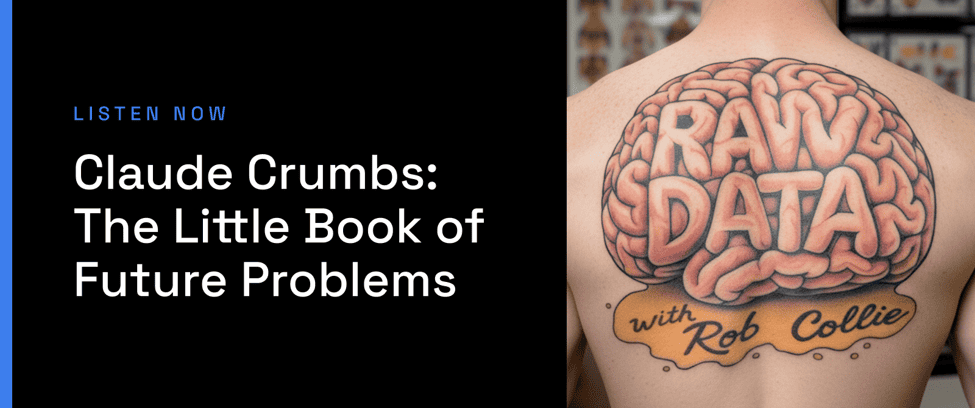
If you’d like to hear the conversation that inspired this article, Rob explores the idea in an episode of Raw Data with Rob Collie. It’s an unbiased look at what AI accelerates, what experience still owns, and why tomorrow’s problems almost always begin as today’s perfectly reasonable decisions.
Building Faster Is Great. Building the Right Thing Is Better.
AI can get you from idea to working remarkably fast. But when the thing you’re building needs to work with your actual data, your actual processes, and all the weird little exceptions your business has collected over the years, experience still counts.
That’s where P3 comes in. We help companies figure out where AI can make a real difference, build what makes sense, and avoid creating a shiny new pile of future problems along the way.
Ready to put AI to work without leaving a trail of crumbs? Schedule a free call now.

Get in touch with a P3 team member